


Description
Chisel Plough: The Ultimate Solution for Deep Tillage and Soil Health
Is your soil becoming harder to work with every year? Do you notice water standing in puddles after rain instead of soaking in? If so, you are likely suffering from soil compaction or a “hardpan” layer.
The Aeco Export Company’s Chisel Plough is designed specifically to solve this problem. While disc ploughs and harrows are excellent for surface preparation, they often create a hard, compacted layer of soil about 6-8 inches below the surface. Roots cannot penetrate this layer, and water cannot drain through it. The Chisel Plough is the heavy-duty solution designed to shatter this barrier, ensuring your crops can grow deep, healthy roots.
What is a Chisel Plough and How Does it Work?
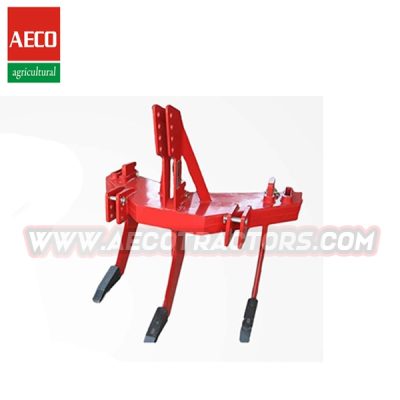
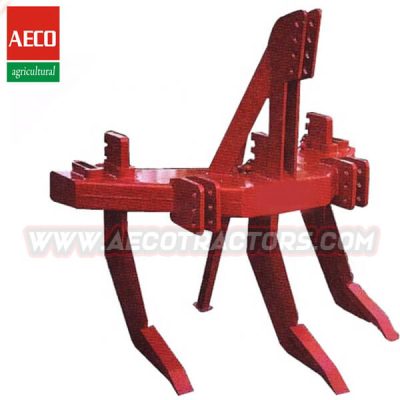
The Chisel Plough is a primary tillage implement. It consists of a heavy steel frame with multiple “shanks” or “tines” that extend downward. Unlike a Moldboard Plow, which flips the soil over completely, the Chisel Plough does not invert the soil.
Instead, it drags through the ground at a significant depth (up to 20 inches). The specialized points on the tines rip through the subsoil, stirring and aerating it while leaving crop residue (straw, stalks) on the surface.
This process is vital for two reasons:
- Moisture Conservation: By leaving residue on top, you protect the soil from the harsh sun and wind, reducing evaporation—a critical factor for farming in the UAE and Africa.
- Erosion Control: The surface residue prevents topsoil from blowing away in dust storms.
The “Hardpan” Problem: Why You Need Deep Tillage
Years of driving heavy tractors and using shallow implements (like rotavators) compresses the soil. This creates a concrete-like layer underground called a hardpan or “plow pan.”
If you don’t break this layer:
- Root Stunting: Crop roots hit the hard layer and grow sideways instead of down. Shallow roots mean the plant creates less yield and dies quickly in a drought.
- Waterlogging: Irrigation water gets stuck on top of the hardpan, drowning the roots and causing salt buildup.
Using an Aeco Chisel Plough once every 1-2 years fractures this layer, essentially “resetting” your soil structure.
| Specifications & Details |
|---|
|
Choosing the Right Size for Your Tractor
Because Chisel Ploughs dig so deep, they require significant pulling power. Selecting the correct size is crucial to avoid damaging your tractor.
- 3-Tine Model: Ideal for smaller tractors (50-60 HP), such as the Massey Ferguson 240 or MF 260. Perfect for small orchards or lighter soil.
- 5-Tine Model: The industry standard. Requires 75+ HP. It pairs perfectly with the Massey Ferguson 375.
- 7-Tine Model: For heavy-duty operations. This requires a high-torque tractor like the Massey Ferguson 385 4WD to pull effectively through deep clay or compacted earth.
Operational Tips: Getting the Best Results
To get the most out of your Farm Implements, technique matters.
- Soil Conditions: Unlike other ploughs, Chisel Ploughs work best when the soil is dry. If the soil is wet, the tines will just slice through like a knife through butter without shattering the ground. You need the soil to be dry enough to “explode” and fracture when the tine hits it.
- Depth Control: Don’t try to go to maximum depth on your first pass. If the ground is very hard, do two passes. Set the first pass at 8-10 inches, and the second pass at full depth (18-20 inches) perpendicular to the first direction.
- Speed: Deep tillage is slow work. Maintain a steady, slow pace to give the tines time to break the soil structure effectively.
Maintenance and Durability
The Chisel Plough is a simple machine, but it takes a beating.
- Replaceable Points: The tips of the tines (points) take the brunt of the friction. These are designed to be replaced. Check them regularly; if they are worn down, the plough will require much more horsepower to pull and won’t penetrate as well.
- Shear Bolts: Our ploughs are equipped with safety shear bolts. If a tine hits a massive underground rock, the bolt will snap to save the frame from bending. Always keep spare bolts in your toolbox.
You can buy the best seeds and the most expensive fertilizer, but if your soil is compacted, you are throwing money away. The Aeco Chisel Plough is an essential tool for any serious farmer looking to improve long-term soil health, water retention, and crop yields.
Break the barrier to better farming. Contact us today to discuss which model fits your tractor.
Frequently Asked Questions (FAQs)
A Subsoiler typically has only 1 or 2 very long tines and goes extremely deep (up to 30 inches) solely to break deep layers. A Chisel Plough has more tines (3 to 7) and works slightly shallower (up to 20 inches), offering a balance between breaking hardpan and preparing the general seedbed.
Yes, absolutely. In conservation agriculture, the Chisel Plough is preferred over the Disc Plough for primary tillage because it retains surface residue and prevents soil erosion.
A general rule of thumb is 12 to 15 Horsepower per tine for deep tillage in heavy soil. For example, a 5-tine plough works best with at least 75 HP.


